Showing posts with label 2010 Celebrity Deaths. Show all posts

Wednesday, October 5, 2011

Steve Jobs Dead at 56

10/5/11: Chairman and Co-Founder of Apple, died due to complications from pancreatic cancer. He was 56. Jobs was known for his keynote speeches that were given each year to update the loyal Apple followers, as well as his enlightening interview style.


SOURCE:  http://www.ranker.com/list/celebrity-deaths-2011-famous-deaths-list/famous-celebrity-deaths-list?page=1&format=BLOG&sortby=&sortdir=&limit= 

Tuesday, December 7, 2010

Elizabeth Edwards Dead at 61


Elizabeth Edwards, who played a pivotal role in her husband's political career and captured the public's sympathy with her lengthy battle with breast cancer and her estrangement from John Edwards over his highly publicized affair, died Tuesday, Fox News has confirmed. She was 61.

A family friend told the Associated Press that Edwards died in North Carolina Tuesday at 10:15 a.m. Edwards stopped receiving treatment this month when doctors told her it would be unproductive.

She thanked all of her supporters in her final Facebook page post this month.

"The days of our lives, for all of us, are numbered. We know that. And yes, there are certainly times when we aren't able to muster as much strength and patience as we would like. It's called being human. But I have found that in the simple act of living with hope, and in the daily effort to have a positive impact in the world, the days I do have are made all the more meaningful and precious. And for that I am grateful.

"It isn't possible to put into words the lover and gratitude I feel to everyone who has and continues to support and inspire me every day. To you I simply say; you know."


Her breast cancer was diagnosed during her husband's vice presidential campaign in 2004. At the start of her husband's presidential campaign in March 2007, she announced that she had Stage 4 – terminal – cancer that had spread from her breast to her bones after a period on the mend. But she pledged to continue campaigning on behalf of her husband.

John Edwards, a former North Carolina senator, was by her side with other family members at the Chapel Hill home despite their public split after 30 years of marriage. John Edwards had an affair and fathered a child with a woman whom he hired to be his videographer on his 2008 presidential campaign.

Elizabeth Edwards went on to publish a memoir and do a speaking tour that included a retelling of his confession to her. She also focused on reforming the country's system of providing health care toward a single-payer process designed to serve all.

Edwards often wondered aloud about the plight of those who faced the same kind of physical struggle, but without her personal wealth.

Elizabeth Edwards stirred controversy with her decision to continue campaigning for her husband's 2008 presidential bid after doctors told her that her cancer had spread. But Edwards was more than a political spouse. She was chief adviser and strategist to her husband's campaigns.

The couple were law school sweethearts who married just days after they took the bar exam together in the summer of 1977.

John Edwards went on to earn millions as a trial lawyer but the pair got off to a modest start. He had to borrow money from her parents for a one-night honeymoon. She always wore her $11 wedding ring. For years they spent their anniversaries going to Wendy's, just as they did on their first one.

Elizabeth Edwards is survived by her three children. Her son, Wade, died at age 16 in a car accident in 1996.

SOURCE

Don Meredith Dead at 72

Don Meredith was the happiest, most fun-loving guy wherever he went, whether crooning country tunes in the huddle as quarterback of the Dallas Cowboys or jawing with Howard Cosell in the broadcast booth as analyst on the groundbreaking "Monday Night Football."


His irreverent personality made him one of the most beloved figures in sports and entertainment in the 1970s and 1980s, helping turn the Cowboys and "Monday Night Football" into national sensations.

"Dandy Don" died Sunday after suffering a brain hemorrhage and lapsing into a coma in Santa Fe, N.M., where he lived out of the limelight with his wife, Susan, for the last 25 years. He was 72.

A folksy foil to Cosell's tell-it-like-it-is pomposity, Meredith was at his best with unscripted one-liners — often aimed at his broadcast partners. His trademark, though, came when one team had the game locked up. Meredith would warble, "Turn out the lights, the party's over" — from a song by his pal Willie Nelson.


Meredith played for the Cowboys from 1960-68, taking them from winless expansion team to the brink of a championship. He was only 31 when he retired before training camp in 1969, and a year later wound up alongside Cosell in the broadcast booth for the oddity of a prime-time, weeknight NFL game.

The league pitched the idea to ABC, the lowest-rated network, after CBS and NBC tried occasional games on Monday nights and didn't think it would click. It became a hit largely because of how much viewers enjoyed the contrast of Meredith's Texas flair and Cosell's East Coast braggadocio.

Friends in real life, they took opposite stances to liven up broadcasts with their bickering. Meredith usually took the majority opinion, Cosell the minority. Cosell was playing a role, while Meredith was just being himself.

"Watching him on TV was like being in the huddle with Don again," former teammate Dan Reeves said. "He just made the game fun."

Blowouts were their playground. Folks kept watching because of them.

In a 1970 game from Dallas, the Cowboys were headed to a 38-0 loss to St. Louis when fans chanted, "We Want Meredith!" Said Meredith, "No way you're getting me down there."

The Houston Oilers were on their way to a 34-0 loss to the Oakland Raiders in 1972 when a camera zoomed in on a disgruntled fan at the Astrodome. He made a one-finger salute and Meredith quipped, "He thinks they're No. 1."

Meredith was the life of the party in the "Monday Night" booth from 1970 through 1984, except for a three-year stint playing a detective on NBC's "Police Story." He spent 11 of those years teamed with another former star player, Frank Gifford, a friend before they became broadcast partners.

"To say that Don was an instant success would be a gross understatement," Gifford said in a statement. "For millions of football fans, he would always be the one who topped Howard Cosell with one-liners or a simple 'Come on, Howard.'"

Current "Monday Night" announcer Jon Gruden spoke for many who grew up during Meredith's time in the booth by recalling how he would "sneak downstairs and watch Don and 'Monday Night Football' when I was supposed to be asleep."

Meredith also appeared in more than a dozen made-for-TV movies, specials or dramas. He once filled in for Johnny Carson on the "Tonight Show," and was a popular pitchman for Lipton tea.

During his playing days, Meredith recorded his own country music single. Former teammate Walt Garrison pulled it out Monday and proudly read the names of the songs: "Travelin' Man" on one side, "Them That Ain't Got It Can't Lose" on the other.

He was the inspiration for the carousing quarterback in the book and movie "North Dallas Forty," written by Pete Gent, a former Cowboys teammate and good friend.

"He loved life, he loved people, God bless him," Garrison said. "When he walked into a room, he took it over. ... You couldn't be sad around Joe Don very long. When you left, you'd come away laughing."

Meredith left "Monday Night Football" a year after Cosell and soon retired from the spotlight altogether. He just didn't want to be famous any more. His absence meant younger generations have only heard "Dandy Don" stories — including current Cowboys coach Jason Garrett, who wore Meredith's No. 17 when he was a Dallas quarterback.

"It was a coincidence, but I always made the connection," Garrett said.

Joseph Donald Meredith was born April 10, 1938, and grew up in the Northeast Texas town of Mount Vernon.

He was a natural athlete. He scored a record 52 points in a high school basketball tournament. At Southern Methodist University, he was All-America quarterback in 1958 and 1959. His popularity in Dallas was part of why the Cowboys signed him to a five-year personal services contract before formally getting an NFL franchise.

Meredith's second career in entertainment obscures what a great quarterback he was, taking a team from 0-11-1 in 1960 to within minutes of reaching each of the first two Super Bowls.


"You look at all the expansion quarterbacks and most of them have been forgotten about, but he was able to take us to the championship game," said Reeves, an NFL head coach for 23 seasons. "I've been around some outstanding quarterbacks: (Roger) Staubach, (Craig) Morton, (John) Elway, Phil Simms. All those guys had some of the same traits as Don, but you'd never get all the traits Don had in one package."

He took his lumps until surrounded by better players.

"Broken noses and collarbones and ribs, everything you can think of, Don had it," said Lee Roy Jordan, his roommate for many years.

Meredith's free spirit never meshed with coach Tom Landry, which led to a love-hate relationship with fans. But the coach and quarterback realized they needed each other.

The turning point in their relationship came midway through 1965, when Landry cried in front of the team after a loss that dropped them to 2-5. He recommitted to Meredith and the Cowboys finished 7-7, their first non-losing season.

They went to the Playoff Bowl, a meaningless matchup of runners-up, then advanced to the NFL championship game the next two seasons.

Dallas narrowly lost to Green Bay both times. Meredith threw a late interception in the first one. The second was the "Ice Bowl," one of the most memorable games in NFL history, won by the Packers on a quarterback sneak in the closing seconds.

Meredith showed up for the 1966 title game with his face covered in stitches. He told everyone he'd been shopping with his wife, got tripped and went through a plate-glass window. He couldn't play.

"You could've heard a pin drop," Reeves said. "Then coach Landry walked in and he peeled it off. It looked so real! He had a makeup artist put it on. We all wanted to choke him to death for scaring us like that. But we all just cracked up."

Dallas lost in the first round of the playoffs in 1968, with Meredith throwing three interceptions and getting replaced by Morton. It turned out to be his last game.

Susan Meredith said she and her daughter were at Meredith's side when he died. A private graveside service was planned.

SOURCE

Monday, November 29, 2010

Leslie Nielsen Dead at 84

Leslie Nielsen, whose longtime career as a square-jawed dramatic actor took a sudden turn into comedy with gut-busting spoofs like "Airplane!" and "The Naked Gun," has died at age 84, his family said Sunday.

The Canadian-born Nielsen's career reached back into the early days of television, when he made frequent appearances on live drama series like "Goodyear Playhouse."

He played the earnest starship captain in the 1956 science-fiction classic "Forbidden Planet" and made regular appearances on a wide range of TV dramas into the 1970s, including "Hawaii Five-O."

He also played the captain of an overturned ocean liner in the 1972 disaster movie, "The Poseidon Adventure."

Much of that changed in 1980, when he was cast as a doctor aboard an endangered jetliner in the gag-a-minute disaster-movie parody "Airplane!"
Remembering Leslie Nielsen

Nielsen's deadpan response to the question "Surely, you can't be serious?" with "I am serious -- and don't call me Shirley" helped launch a second career.

The film's producers went on to cast him in their short-lived television series "Police Squad!"

He reprised that show's bumbling lead character, Lt. Frank Drebin, a decade later in three "Naked Gun" movies, in which he shared the screen with O.J. Simpson and Priscilla Presley.

Nielsen appeared in several similar but less-acclaimed spoofs following those films.

Nielsen was made an Officer of the Order of Canada in 2003. The medal is awarded to "Canadian citizens for outstanding achievement and service to the country or to humanity at large."

Nielsen died of complications of pneumonia in a hospital near his home in Fort Lauderdale, Florida, surrounded by family and friends, a family statement said.

Doug Nielsen called his uncle's death a "great loss."

"He was extremely funny," the younger Nielsen said in an interview with CNN affiliate Global Network News in Vancouver.

"At all of our family get-togethers, he was always the life of the party and a great-natured guy," Nielsen said. "He was a very good friend to me."

SOURCE

Tuesday, November 9, 2010

Philip Carlo Dead at 61

Philip Carlo, who produced novels and nonfiction accounts of serial killers and hit men before writing about his own struggles with disease, died on Nov. 8 in Manhattan. He was 61.

The cause was a combination of amyotrophic lateral sclerosis, also known as Lou Gehrig’s disease, and cancer, said his wife, Laura Garofalo-Carlo.

A stay at Bellevue Hospital in the late 1970s inspired his first book, an unpublished novel about a murder on the wards. His second novel, “Stolen Flower,” about an American girl kidnapped by a child pornography ring in Pompeii, was published by Dutton in 1986.

Mr. Carlo soon branched into nonfiction, publishing four books based on interviews with mass murderers. Titles include “The Night Stalker: The Life and Crimes of Richard Ramirez,” about the serial killer who terrorized Los Angeles in 1984 and 1985 (Kensington, 1996); and “The Iceman: Confessions of a Mafia Contract Killer,” about Richard Kuklinski, a mob hit man who claimed to have fed some of his victims to giant rats (St. Martin’s Press, 2006). A film adaptation of the book, starring Mickey Rourke, is planned for next year.

Philip John Carlo was born in Brooklyn on April 18, 1949. He struggled with dyslexia in school before graduating from Franklin Delano Roosevelt High School in Brooklyn. Mr. Carlo told The New York Times last year that his youth in Bensonhurst, Brooklyn, a Mafia enclave at the time, gave him “a personal innate understanding” of crime and the mettle to confront it in his writing.

Mr. Carlo spent 60 days in Rikers Island himself for misdemeanor assault after a fistfight with a deliveryman who left menus in his building despite a no-menus sign. “It was a crazy, ridiculous incident,” he said.

Mr. Carlo learned he had A.L.S., an incurable illness that causes paralysis, in 2005. After the diagnosis, he completed four books with the help of an assistant, including “The Killer Within,” a memoir about his struggle against A.L.S. “I have a deadline,” he said. “My own death.”

A malignant brain tumor was discovered in October.

Mr. Carlo, whose first marriage, to Maria Cecilia Medeiros Lima, ended in divorce, married Ms. Garofalo-Carlo in 2007. Besides his wife, he is survived by his mother, Nina; his father, Dante; and a sister, Doreen Mannanice, all of Freeport, N.Y.

SOURCE

Friday, November 5, 2010

Sparky Anderson Dead at 76

Reds fans were taken aback when Sparky Anderson showed up for his first day as a big league manager, an unknown taking over baseball's first professional team. Most had never heard of him.

By the time he was done, he was an icon. The sentence-twisting manager with the white hair and schoolboy nickname would win three World Series titles — including championships in both leagues — and make it to the Hall of Fame.
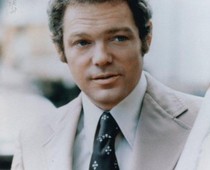
Anderson directed the Big Red Machine to back-to-back championships and won another in Detroit during a managing career that spanned three decades. He died Thursday from complications of dementia in Thousand Oaks, Calif., at age 76.

Anderson was the first manager to win World Series titles in both leagues and the only manager to lead two franchises in career wins.

"Sparky was, by far, the best manager I ever played for," said former Reds star Pete Rose, the game's career hits leader. "He understood people better than anyone I ever met. His players loved him, he loved his players, and he loved the game of baseball. There isn't another person in baseball like Sparky Anderson."

Anderson's teams in Cincinnati — featuring Johnny Bench, Joe Morgan and Rose — won crowns in 1975 and 1976 and rank among the best of all time. Led by Kirk Gibson and Alan Trammell, Anderson won with the Tigers in 1984.

"He was a good guy," former Tigers pitcher Jack Morris said, choking up over the news. "Baseball will have very few people like Sparky."

Anderson never tried to overshadow his teams, giving his stars great leeway while trying to stay in the background. At Anderson's request, there will be no funeral or memorial service.


Monday, November 1, 2010

Denise Borino-Quinn Dead at 46

US actress Denise Borino-Quinn, who played a mafia wife on the HBO Series, The Sopranos, has died of cancer aged 46.

She unexpectedly won the role after attending an open casting call to support a childhood friend in 2000.

Borino-Quinn played Ginny Sacrimoni, the mafia wife with a weight problem on the massively successful television drama on cable station HBO.

The Farmer Funeral Home in New Jersey said she died on Wednesday after a long battle with liver cancer.

Her husband, Luke Quinn Jr, died in March.

Her Sopranos role was her first foray into acting and her character was instantly popular with fans of the show.

Borino-Quinn beat 14,000 other hopefuls to get the part.

Her other job when she was not on the small screen was working in a law firm in New Brunswick, New Jersey.

The award-winning Sopranos ran for eight years until 2007 and centered on the lives of a dysfunctional mob family.

SOURCE

Thursday, October 28, 2010

James MacArthur Dead at 72


James MacArthur star of the hit the tv showed Hawaii Five-O who played dectective Dan Williams better known as Danno has passed away at the age of 72.

For 11 seasons Hawaii Five-O had millions tuning into see the latest crime adventure on the beautiful islands of Hawaii waiting to hear the famous popular catch phrase "Book 'em Danno" to end that nights island crime spree.

Detective Dan William's character was made famous by tv actor James MacArthur, and the actors death was confirmed by gossipcop earlier today. Details surrounding MacArthur's death and funeral have yet to be reported.

Before making the move to Hawaii for his most notable tv role James MacArthur previously starred in the family oriented drama's Swiss Family Robinson and Spencer's Mountain.

James MacArthur is the son of legendary actress Helen Hayes who also appeared on an episode of Hawaii Five-O in 1975 as Aunt Clara.

Ken R of Cincinnati stated "I remember watching Hawaii Five-O as a child and then my brothers and I work re -enact the show and we always, always said "Book 'em Danno" , but it was always a big argument about who's turn it was to be Danno."

SOURCE

Tuesday, October 19, 2010

Tom Bosley Dead at 83

Tom Bosley, the actor who played mild-mannered hardware store owner Howard Cunningham on the classic sitcom 'Happy Days,' died on Tuesday, his agent confirmed.  Bosley was 83.

He had been battling a staph infection when he passed away at his Palm Springs home, according to reports.

Bosley's death comes just days after that of another beloved TV parent. Barbara Billingsley, who played mom June Cleaver on 'Leave It to Beaver," died this past weekend.

Bosley also starred in the "Father Dowling Mysteries" series in the late '90s, but he was best knows as Richie and Joanie Cunningham's dad, and Arthur "The Fonz" Fonzarelli's landlord, on "Happy Days," which aired from 1974-84.

The show depicted middle-class life in Milwaukee, Wisconsin in the 1950s just as rock and roll was taking hold of the American consciousness.

Bosley's character was typically the calm at the center of the storm, often dispensing his reasonable advice from the comfort of his easy chair in the Cunninghams' living room.

SOURCE

Saturday, October 16, 2010

Barbara Billingsley Dead at 94

Barbara Billingsley, who gained supermom status for her gentle portrayal of June Cleaver, the warm, supportive mother of a pair of precocious boys in "Leave it to Beaver," died Saturday. She was 94.

Billingsley, who had suffered from a rheumatoid disease, died at her home in Santa Monica, said family spokeswoman Judy Twersky.

When the show debuted in 1957, Jerry Mathers, who played Beaver, was 9, and Tony Dow, who portrayed Wally, was 12. Billingsley's character, the perfect stay-at-home 1950s mom, was always there to gently but firmly nurture both through the ups and downs of childhood.

Beaver, meanwhile, was a typical American boy whose adventures landed him in one comical crisis after another.

Billingsley's own two sons said she was pretty much the image of June Cleaver in real life, although the actress disagreed. She did acknowledge that she may have become more like June as the series progressed.

"I think what happens is that the writers start writing about you as well as the character they created," she once said. "So you become sort of all mixed up, I think."

A wholesome beauty with a lithe figure, Billingsley began acting in her elementary school's plays and soon discovered she wanted to do nothing else.

Although her beauty and figure won her numerous roles in movies from the mid-1940s to the mid-1950s, she failed to obtain star status until "Leave it to Beaver," a show that she almost passed on.

"I was going to do another series with Buddy Ebsen for the same producers, but somehow it didn't materialize," she told The Associated Press in 1994. "A couple of months later I got a call to go to the studio to do this pilot show. And it was `Beaver."'

Decades later, she expressed surprise at the lasting affection people had for the show.

"We knew we were making a good show, because it was so well written," she said. "But we had no idea what was ahead. People still talk about it and write letters, telling how much they watch it today with their children and grandchildren."

After "Leave it to Beaver" left the air in 1963 Billingsley largely disappeared from public view for several years.

She resurfaced in 1980 in a hilarious cameo in "Airplane!" playing a demur elderly passenger not unlike June Cleaver.

When flight attendants were unable to communicate with a pair of jive-talking hipsters, Billingsley's character volunteered to translate, saying "I speak jive." The three then engage in a raucous street-slang conversation.

"No chance they would have cast me for that if I hadn't been June Cleaver," she once said.

She returned as June Cleaver in a 1983 TV movie, "Still the Beaver," that costarred Mathers and Dow and portrayed a much darker side of Beaver's life.

In his mid-30s, Beaver was unemployed, unable to communicate with his own sons and going through a divorce. Wally, a successful lawyer, was handling the divorce, and June was at a loss to help her son through the transition.

"Ward, what would you do?" she asked at the site of her husband's grave. (Beaumont had died in 1982.)

The movie revived interest in the Cleaver family, and the Disney Channel launched "The New Leave It to Beaver" in 1985.

The series took a more hopeful view of the Cleavers, with Beaver winning custody of his two sons and all three moving in with June.

In 1997 Universal made a "Leave it to Beaver" theatrical film with a new generation of actors. Billingsley returned for a cameo, however, as Aunt Martha.

In later years she appeared from time to time in such TV series as "Murphy Brown," "Empty Nest" and "Baby Boom" and had a memorable comic turn opposite fellow TV moms June Lockhart of "Lassie" and Isabel Sanford of "The Jeffersons" on the "Roseanne" show.

"Now some people, they just associate you with that one role (June Cleaver), and it makes it hard to do other things," she once said. "But as far as I'm concerned, it's been an honor."

In real life, fate was not as gentle to Billingsley as it had been to June and her family.

Born Barbara Lillian Combes in Los Angeles on Dec. 22, 1922, she was raised by her mother after her parents divorced. She and her first husband, Glenn Billingsley, divorced when her sons were just 2 and 4.

Her second husband, director Roy Kellino, died of a heart attack after three years of marriage and just months before she landed the "Leave it to Beaver" role.

She married physician Bill Mortenson in 1959 and they remained wed until his death in 1981.

Survivors include her sons, three stepchildren and numerous grandchildren.

SOURCE

Thursday, September 30, 2010

Greg Giraldo Dead at 44

Comedian Greg Giraldo tragically passed away September 29, 2010, shocking the entire comedy community and prompting an outpour of sadness online. A genuinely hilarious and intelligent stand-up comedian, Giraldo had a degree from Harvard law, was a longtime member of the Comedy Central family and is leaving behind a wife and four children.

Greg Giraldo (December 10, 1965 — September 29, 2010) was an American stand-up comedian, television personality, insult comic and former lawyer. He died Wednesday, September 29, 2010, after being hospitalized on September 25th for an overdose of prescription medication.

We will always remember his numerous stand-up appearances, as well as his time on "Last Comic Standing," but his most memorable performances were at the Comedy Central Roasts. From Pam Anderson and David Hasselhoff, to Flavor Flav and Joan Rivers, Giraldo was truly the King of the Roast.

SOURCE

Tony Curtis Dead at 85

Tony Curtis, the Bronx tailor's son who became a 1950s movie heartthrob and then a respected actor with such films as "Sweet Smell of Success," "The Defiant Ones" and "Some Like It Hot," has died. He was 85.

The actor died at 9:25 p.m. MDT Wednesday at his Las Vegas area home of a cardiac arrest, Clark County Coroner Mike Murphy said Thursday.

After a series of frivolous movies that exploited his handsome physique and appealing personality, Curtis moved to more substantial roles, starting in 1957 in the harrowing show business tale "Sweet Smell of Success."

In 1958, "The Defiant Ones" brought him an Academy Award nomination as best actor for his portrayal of a white racist escaped convict handcuffed to a black escapee, Sidney Poitier. The following year, he donned women's clothing and sparred with Marilyn Monroe in one of the most acclaimed film comedies ever, Billy Wilder's "Some Like It Hot."

His first wife was actress Janet Leigh of "Psycho" fame; actress Jamie Leigh Curtis is their daughter.

In later years, he returned to film and television as a character actor after battling drug and alcohol abuse. His brash optimism returned, and he allowed his once-shiny black hair to turn silver. He also became a painter whose canvasses sold for as much as $20,000.

"I'm not ready to settle down like an elderly Jewish gentleman, sitting on a bench and leaning on a cane," he said at 60. "I've got a helluva lot of living to do."

Curtis perfected his craft in forgettable films such as "Francis," "I Was a Shoplifter," "No Room for the Groom" and "Son of Ali Baba."

He first attracted critical notice as Sidney Falco, the press agent seeking favor with a sadistic columnist, played by Burt Lancaster, in the 1957 classic "Sweet Smell of Success."

In her book "Kiss Kiss Bang Bang," Pauline Kael wrote that in the film, "Curtis grew up into an actor and gave the best performance of his career."

Other prestigious films followed: Stanley Kubrick's "Spartacus," "Captain Newman, M.D.," "The Vikings," "Kings Go Forth," "Operation Petticoat" and "Some Like It Hot." He also found time to do a voice acting gig as his prehistoric lookalike, Stony Curtis, in an episode of "The Flintstones."

"The Defiant Ones" remained his only Oscar-nominated role.

"I think it has nothing to do with good performances or bad performances," he told The Washington Post in 2002. "After the number of movies I made where I thought there should be some acknowledgment, there was nothing from the Academy."

"My happiness and privilege is that my audience around the world is supportive of me, so I don't need the Academy."

In 2000, an American Film Institute survey of the funniest films in history ranked "Some Like It Hot" at No. 1. Curtis -- famously imitating Cary Grant's accent -- and Jack Lemmon play jazz musicians who dress up as women to escape retribution after witnessing a gangland massacre.

Monroe was their co-star, and he and Lemmon were repeatedly kept waiting as Monroe lingered in her dressing room out of fear and insecurity. Curtis fumed over her unprofessionalism. When someone remarked that it must be thrilling to kiss Monroe in the film's love scenes, the actor snapped, "It's like kissing Hitler." In later years, his opinion of Monroe softened, and in interviews he praised her unique talent.

In 2002, Curtis toured in "Some Like It Hot" -- a revised and retitled version of the 1972 Broadway musical "Sugar," which was based on the film. In the touring show, the actor graduated to the role of Osgood Fielding III, the part played in the movie by Joe E. Brown.

After his star faded in the late 1960s, Curtis shifted to lesser roles. With jobs harder to find, he fell into drug and alcohol addiction.

"From 22 to about 37, I was lucky," Curtis told Interview magazine in the 1980s, "but by the middle '60s, I wasn't getting the kind of parts I wanted, and it kind of soured me. ... But I had to go through the drug inundation before I was able to come to grips with it and realize that it had nothing to do with me, that people weren't picking on me."

He recovered in the early '80s after a 30-day treatment at the Betty Ford Center in Rancho Mirage.

"Mine was a textbook case," he said in a 1985 interview. "My life had become unmanageable because of booze and dope. Work became a strain and a struggle. Because I didn't want to face the challenge, I simply made myself unavailable."

One role during that era of struggle did bring him an Emmy nomination: his portrayal of David O. Selznick in the TV movie "The Scarlett O'Hara War," in 1980.

His health remained vigorous, though he did get heart bypass surgery in 1994.

Curtis took a fatherly pride in daughter Jamie Leigh's success. They were estranged for a long period, then reconciled. "I understand him better now," she said, "perhaps not as a father but as a man."

He also had five other children. Daughters Kelly, also with Leigh, and Allegra, with second wife Christine Kaufmann, also became actresses. His other wives were Leslie Allen, Lisa Deutsch and Jill VandenBerg, whom he married in 1998.

He had married Janet Leigh in 1951, when they were both rising young stars; they divorced in 1963.

"Tony and I had a wonderful time together; it was an exciting, glamorous period in Hollywood," Leigh, who died in 2004, once said. "A lot of great things happened, most of all, two beautiful children."

Curtis was born Bernard Schwartz in the Bronx in 1925, the son of Hungarian Jews who had emigrated to the United States after World War I. His father, Manny Schwartz, had yearned to be an actor, but work was hard to find with his heavy accent. He settled for tailoring jobs, moving the family repeatedly as he sought work.

"I was always the new kid on the block, so I got beat up by the other kids," Curtis recalled in 1959. "I had to figure a way to avoid getting my nose broken. So I became the crazy new kid on the block."

His sidewalk histrionics helped avoid beatings and led to acting in plays at a settlement house. He also grew to love movies. "My whole culture as a boy was movies," he said. "For 11 cents, you could sit in the front row of a theater for 10 hours, which I did constantly."

After serving in the Pacific during World War II and being wounded at Guam, he returned to New York and studied acting under the G.I. Bill. He appeared in summer stock theater and on the Borscht Circuit in the Catskills. Then an agent lined up an audition with a Universal-International talent scout. In 1948, at 23, he signed a seven-year contract with the studio, starting at $100 a week.

Bernie Schwartz sounded too Jewish for a movie actor, so the studio gave him a new name: Anthony Curtis, taken from his favorite novel, "Anthony Adverse," and the Anglicized name of a favorite uncle. After his eighth film, he became Tony Curtis.

The studio helped smooth the rough edges off the ambitious young actor. The last to go was his street-tinged Bronx accent. His diction became a Hollywood joke, as when he uttered to Piper Laurie in a medieval potboiler "The Prince Who Was a Thief": "Yonder lies the castle of my fodder."

Curtis pursued another career as an artist, creating Matisse-like still lifes with astonishing speed. "I'm a recovering alcoholic," he said in 1990 as he concluded a painting in 40 minutes in the garden of the Bel-Air Hotel. "Painting has given me such a great pleasure in life, helped me to recover."

He also turned to writing, producing a 1977 novel, "Kid Cody and Julie Sparrow." In 1993, he wrote "Tony Curtis: The Autobiography."

SOURCE

Tuesday, August 10, 2010

Former Alaska Sen. Ted Stevens Dies in Plane Crash

JUNEAU, Alaska – A plane carrying former Sen. Ted Stevens and eight others crashed in remote southwest Alaska, killing the longtime Republican lawmaker and four other people, authorities said Tuesday.

Ex-NASA chief Sean O'Keefe was also believed to be aboard, but it was unclear whether he was among the dead.

Stevens' family has been notified that the 86-year-old was among those killed in the crash Monday night, family spokesman Mitch Rose told The Associated Press.

Rescuers arrived on helicopter early Tuesday and were giving medical care to survivors, Alaska National Guard spokesman Maj. Guy Hayes said. He offered no additional details, except that there were potential fatalities.

Alaska officials reported that nine people were aboard the aircraft and that "it appears that there are five fatalities," NTSB spokesman Ted Lopatkiewicz told The Associated Press in Washington.

Lopatkiewicz said the NTSB is sending a team to the crash site outside Dillingham, located in northern Bristol Bay about 325 miles southwest of Anchorage. The aircraft is a DeHavilland DHC-3T registered to Anchorage-based GCI.

Federal Aviation Administration spokesman Mike Fergus said the plane took off at 2 p.m. Monday from a GCI corporate site on Lake Nerka, heading to the Agulowak Lodge on Lake Aleknagik. He didn't know if that was the final destination or a refueling stop.

The GCI lodge is made of logs and sits on a lake, and photos show a stately main lodge room with a large imposing stone fireplace, a leather sofa and a mounted caribou head on the wall.

Fergus said the plane was flying by visual flight rules, and was not required to file a flight plan.

Stevens and O'Keefe are fishing buddies and the former senator had been planning a fishing trip near Dillingham, friend William Canfield said. The flights at Dillingham are often perilous through the mountains, even in good weather.

Hayes said the Guard was called to the area about 20 miles north of Dillingham around 7 p.m. Monday after a passing aircraft saw the downed plane. But severe weather has hampered search and rescue efforts.

The National Weather Service reported rain and fog, with low clouds and limited visibility early Tuesday. Conditions ranged from visibility of about 10 miles reported at Dillingham shortly before 7 p.m. Monday to 3 miles, with rain and fog later.

At least three crash victims were being airlifted to Anchorage, Guard spokeswoman Kalei Brooks Rupp said. She said volunteers hiked into the crash site Monday night and provided medical aid until rescuers arrived.

Lawmakers, officials in both national parties and residents in Alaska were awaiting news of Stevens' fate.

The moderate Republican was appointed to the Senate in 1968 and served longer than any other Republican in history. He was beloved as a tireless advocate for Alaska's economic interests.

The White House said Obama administration officials were closely watching news out of Alaska.

Sen. Lisa Murkowski, R-Alaska, asked Alaskans to join her in prayer for all those aboard the aircraft and their families, as did Sen. Mark Begich, D-Alaska. He called the plane crash tragic.

Begich's father, Nick Begich, who was Alaska's only congressman in 1972, was killed when his plane disappeared over the Gulf of Alaska with then-House Majority Leader Hale Boggs of Louisiana.

Stevens was one of two survivors in a 1978 plane crash at Anchorage International Airport that killed his wife, Ann, and several others. He remarried several years after the crash — he and his second wife, Catherine, have a daughter, Lily.

Over the years, Stevens directed billions of dollars to Alaska.

But one of his projects — infamously known as the "Bridge to Nowhere" — became a symbol of pork-barrel spending in Congress and a target of taxpayer groups who challenged a $450 million appropriation for bridge construction in Ketchikan.

Stevens' standing in Alaska was toppled by corruption allegations and a federal trial in 2008. He was convicted of all seven counts — and narrowly lost his Senate seat to Begich in the election the following week.

But five months after the election, Attorney General Eric Holder sought to dismiss the indictment against Stevens and not proceed with a new trial because of prosecutorial misconduct by federal prosecutors.

O'Keefe, 54, was NASA administrator for three tumultuous years. He was deputy director of the Office of Management and Budget when President George W. Bush asked him in late 2001 to head NASA and help bring soaring space station costs under control.

But budget-cutting became secondary when the shuttle Columbia broke apart during re-entry in 2003.

O'Keefe's most controversial action at NASA was when he decided to cancel one last repair mission by astronauts to the Hubble Space Telescope. He said the mission was too risky. His successor overturned the decision. The Hubble mission was carried out last year.

O'Keefe left NASA in 2005 to become chancellor of Louisiana State University. He is now the CEO of defense contractor EADS North America and oversees the bid for the hotly contested Air Force refueling jet contract.

The company said O'Keefe was a passenger on the plane. The company said it had no further information about O'Keefe's status.

The contract competition, which pits EADS against rival plane maker Boeing Co., is for a piece of what could eventually be $100 billion worth of work replacing the military's fleet of aging tankers.

SOURCE

Wednesday, July 28, 2010

Lorenzen Wright Dead at 34

Relatives and friends of Lorenzen Wright gathered Wednesday and grieved for the former NBA player who has been missing for 10 days, as police investigated the discovery of a man's body outside of Memphis.

Wright's uncle, Curtis Wright, told the Associated Press that police called the player's father, Herb Wright, Wednesday afternoon with the news he had died.

Sgt. Alyssa Macon-Moore of the Memphis Police Department wrote in an e-mail to the AP that police were investigating the death of an unidentified man beside a wooded area about 15 miles south of downtown Memphis. Asked if the man was Wright, she wrote they could not confirm the victim's identity Wednesday night.

The family issued a statement through a cousin of Lorenzen Wright, Camella Logan: "Lorenzen's family has come together to mourn his loss and honor his legacy. We appreciate your thoughts, prayers and condolences as they are comforting at this very difficult time. Additionally, we ask that you please respect our privacy as we try to cope with his sudden loss."

Wright's mother, Deborah Marion, arrived at the scene Wednesday night with a handful of family members. She crossed the crime scene tape and tried to talk to police when she was told to move back. She sat in a TV van before returning to the tape. Two officers then let her through.

The distraught Marion then started running down the road toward the crime scene before being stopped by an officer. She spoke with officers, then walked back past reporters without speaking straight to a van.

The 34-year-old Wright was last seen July 18 when he was expected to fly out of town. His family filed a missing person report July 22.

Wright played 13 years in the NBA with five different teams: the Los Angeles Clippers, Atlanta Hawks, Memphis Grizzlies, Sacramento Kings and most recently the Cleveland Cavaliers with 17 games in the 2008-09 season. Wright left the University of Memphis early for the NBA, and the Clippers made him a lottery pick with the No. 7 selection overall.

He averaged 8 points and 6.4 rebounds per game in 778 career games.

By nightfall, nearly 200 people had visited the road blocked off by police while TV news helicopters showed investigators scouring the grounds for evidence. Police brought in a mobile command center that further blocked off the scene.

Former NBA star Penny Hardaway, who played at Memphis two years before Wright, said he heard the news from a friend and went to the scene near where the body was found.

"I cried. The emotions hit me immediately. It's just sad because we lost a good person and a brother," Hardaway said.

Elliot Perry, another friend and former Memphis player, also was at the scene. Wendy Wilson, who once worked as Wright's personal assistant, also was there and said Wright often used the road police had cordoned off as a shortcut to his mother's house.

"He was a good person. He did not deserve to die this way. God is not pleased with this," Wilson said.

SOURCE

Tuesday, July 13, 2010

George Steinbrenner Dead at 80

George Steinbrenner, who rebuilt the New York Yankees into a sports empire with a mix of bluster and big bucks that polarized fans all across America, died Tuesday. He had just celebrated his 80th birthday July 4.

Steinbrenner had a heart attack, was taken to St. Joseph's Hospital in Tampa, Fla., and died at about 6:30 a.m, a person close to the owner told The Associated Press. The person spoke on condition of anonymity because the team had not disclosed those details.

His death was the second in three days to rock the Yankees. Bob Sheppard, the team's revered public address announcer from 1951-07, died Sunday at 99.

For more than 30 years, Steinbrenner lived up to his billing as "the Boss," a nickname he earned and clearly enjoyed as he ruled with an iron fist. He was known for feuds, clashing with Yankees great Yogi Berra and hiring manager Billy Martin five times while repeatedly clashing with him.

But as his health declined, Steinbrenner let sons Hal and Hank run more of the family business.

New York Yankees owner George Steinbrenner died Tuesday morning, after reportedly suffering a massive heart attack in his Florida home Monday night. Under his ownership, the Yankees have appeared in the World Series 11 times, winning seven titles, including the 2009 championship.

Steinbrenner was in fragile health for years, resulting in fewer public appearances and pronouncements. Yet dressed in his trademark navy blue blazer and white turtleneck, he was the model of success: The Yankees won seven World Series titles and 11 American League pennants after his reign began in 1973.

He appeared at the new Yankee Stadium just four times: for the opener in April 2009, for the first two games of last year's World Series and for this year's homer opener, when captain Derek Jeter and manager Joe Girardi went to his suite and personally delivered his seventh World Series ring.

"He was very emotional," said Hal Steinbrenner, his father's successor as managing general partner. Till the end, Steinbrenner demanded championships. He barbed Joe Torre during the 2007 AL playoffs, then let the popular manager leave after another loss in the opening round. The team responded last year by winning another title.

Steinbrenner had fainted at a memorial service for NFL star Otto Graham in 2003, appeared weak in 2006 at the groundbreaking for the new Yankee Stadium and later became ill while watching his granddaughter in a college play. Still, the former Big Ten football coach took umbrage when others questioned his fitness.

"No, I did not have a stroke. I am not ill. I work out daily," Steinbrenner said in 2006. "I'd like to see people who are saying that to come down here and do the workout that I do."

When Steinbrenner headed a group that bought the team on Jan. 3, 1973, he promised absentee ownership. But it didn't turn out that way.

Steinbrenner not only clashed with Berra for more than a decade but paid to dig up dirt on Dave Winfield, deriding the future Hall of Famer as "Mr. May" in 1985 after poor performances. Berra's wife, Carmen, said Tuesday her husband was at a golf event in Pennsylvania and was expected to comment later in the day.

While he liked to appear stern, Steinbrenner could poke fun at himself. He hosted "Saturday Night Live," clowned with Martin in a commercial and chuckled at his impersonation on "Seinfeld."

He gave millions to charity, often with one stipulation, that no one be told who made the donation.

The Yankees paid off for him, too, with their value increasing more than 100-fold from the $8.7 million net price his group paid in January 1973. He freely spent his money, shelling out huge amounts for Jeter, Reggie Jackson, Alex Rodriguez, Torre and others in hopes of yet another title.

"Winning is the most important thing in my life, after breathing," Steinbrenner was fond of saying. "Breathing first, winning next."

All along, he envisioned himself as a true Yankee Doodle Dandy. It was fitting: George Michael Steinbrenner III was born on the Fourth of July, in 1930.

Added up, he joined the likes of Al Davis, Charlie O. Finley, Bill Veeck, George Halas, Jack Kent Cooke and Jerry Jones as the most recognized team owners in history.

Steinbrenner's sporting interests extended beyond baseball.

He was an assistant football coach at Northwestern and Purdue in the 1950s and was part of the group that bought the Cleveland Pipers of the American Basketball League in the 1960s.

He was a vice president of the U.S. Olympic Committee from 1989-96 and entered six horses in the Kentucky Derby, failing to win with Steve's Friend (1977), Eternal Prince (1985), Diligence (1996), Concerto (1997), Blue Burner (2002) and the 2005 favorite, Bellamy Road.

To many, though, the Yankees and Steinbrenner were synonymous.

His fans applauded his win-at-all-costs style. His detractors blamed him for spiraling salaries and wrecking baseball's competitive balance.

Steinbrenner never managed a game, as Ted Turner once did when he owned the Atlanta Braves, but he controlled everything else. When he thought the club's parking lot was too crowded, Steinbrenner stood on the pavement -- albeit behind a van, out of sight -- and had a guard personally check every driver's credential.

Steinbrenner made no apologies for bombast and behavior, even when it cost him dearly.

He served two long suspensions: He was banned for 2 1/2 years for paying self-described gambler Howie Spira to dig up negative information about Winfield, and for 15 months following a guilty plea in federal court for conspiring to make illegal campaign contributions during the Watergate era.

"I haven't always done a good job, and I haven't always been successful," Steinbrenner said in 2005. "But I know that I have tried."

SOURCE

Monday, June 28, 2010

Robert Byrd Dead at 92

Senator Robert Byrd of West Virginia, the longest-serving senator in American history, died Monday at the age of 92, a spokesman for the family said.

Byrd, a Democrat who served in the U.S. Senate since 1959, had been plagued by health problems in recent years and was confined to a wheelchair. He had skipped several votes in Congress in the past months.

Jesse Jacobs, a family spokesman, said Byrd died peacefully at about 3 a.m. at Inova Hospital in Fairfax, Va.

He was the oldest member of the 111th Congress.

The passing of Sen. Byrd will not affect the balance of power in the Senate. West Virginia Governor Joe Manchin, a Democrat, will appoint a replacement senator to serve out the remainder of Byrd's term, which ends in 2012.

July 5, 1967: Sen. Robert Byrd of West Virginia, a fiery orator versed in the classics and a hard-charging power broker who steered billions of federal dollars to the state of his Depression-era upbringing, died June 28, 2010.

Pork or Progress? Either Way, Byrd Changed W. Va.

May 20, 2010: Sen. Robert Byrd, D-W.Va., readies his microphone as he arrives to question panel members on Capitol Hill in Washington, during the Senate Health and Human Services subcommittee hearing on mine safety.

Financial Reform in Jeopardy With Sen. Byrd's Death?

Statements from his longtime colleagues poured out Monday morning, as fellow senators remembered Byrd as a steadfast presence in the chamber and a veritable tome of knowledge on how the Senate works.

"The people of West Virginia have lost a dedicated public servant, and America has lost a great defender of its most precious traditions," Senate Majority Leader Harry Reid said in a written statement. "He was the foremost guardian of the Senate's complex rules, procedures and customs, and as leader of both the majority and the minority caucuses in the Senate he knew better than most that legislation is the art of compromise. By virtue of his endurance, Robert Byrd knew and worked with many of the greats of the United States Senate."

Secretary of State Hillary Clinton, a former senator, called Byrd the "heart and soul" of the chamber.

"It is almost impossible to imagine the United States Senate without Robert Byrd," she said.

A traditional black drape has been placed over Byrd's desk, a sign of respect for the deceased in Congress.

The veteran senator held a number of leadership roles during his tenure in the Senate, including conference secretary, majority whip and majority leader -- twice.


Prior to his death, Byrd worked as the president pro tempore -- the second highest ranking official in the Senate and the highest ranking senator in the majority party, putting Byrd third in line to the presidency.

He also served as the senior member of the Senate Appropriations Committee, and the chairman of the Senate Appropriations Subcommittee on Homeland Security. Other committees on which Byrd served were the Senate Budget, Armed Services and Rules and Administration Committees.

Byrd, who never lost an election, cast more than 18,540 roll call votes -- more than any other senator in U.S. history. He had a 98 percent attendance record in his more than five decades of service in the Senate, according to his Web site.

Byrd was born Cornelius Calvin Sale, Jr. in North Wilkesboro, N.C., in 1917. When his mother died in the 1918 flu pandemic, he was sent to live with his aunt and uncle, who renamed him Robert Carlyle Byrd and raised him in the coal-mining region of southern West Virginia.

He received his law degree from American University in 1963, and his undergraduate degree from Marshall University in 1994 -- at age 76.

Byrd was widely regarded as a pre-eminent expert on constitutional law and legislative procedures. Because of his intimate knowledge of Senate rules, he was both feared and respected by his political opponents.

He helped win ratification of the Panama Canal Treaty and was well known for steering federal dollars to his home state. He was also a strong opponent to the Iraq war and vehemently defended minority party rights in the Senate.

He was elected to Congress in 1952, representing West Virginia's 6th Congressional District. Six years later, he was elected to the U.S. Senate.

Byrd threw his support behind Barack Obama a week after the then-senator lost the West Virginia Democratic primary to Hillary Clinton during the 2008 presidential campaign -- an endorsement that symbolized the shift in his views on race.

Once a member of the Klu Klux Klan, it was the defining moment in his lifelong effort to convince the American public of his changed views on race.

"I have done my best to do the right thing," Byrd said during a March 2005 interview with Fox News, during which he was questioned about his KKK membership in the early 1940s.

"The people of West Virginia know that. They know the history. And they put it aside. They continue to return me. I was wrong, as many young men are wrong today, even when they join groups. That's all in the past," Byrd said.

Byrd characterized himself as a "born-again" Christian whose views on race were changed by "time, reflection and the teachings of the Bible."

SOURCE

Saturday, June 19, 2010

Manute Bol Dead at 47

Manute Bol, a lithe 7-foot-7 shot-blocker from Sudan who spent 10 seasons in the NBA and was dedicated to humanitarian work in Africa, died Saturday. He was 47. Bol died at the University of Virginia Hospital in Charlottesville, where he was being treated for severe kidney trouble and a painful skin condition, Tom Prichard, executive director of the group Sudan Sunrise, said in an e-mail.

"Sudan and the world have lost a hero and an example for all of us," Prichard said. "Manute, we'll miss you. Our prayers and best wishes go out to all his family, and all who mourn his loss."

Bol played in the NBA with Washington, Golden State, Philadelphia and Miami, averaging 2.6 points, 4.2 rebounds and 3.3 blocks for his career. He led the league in blocks in 1985-86 with Washington (5.0 per game) and in 1988-89 with Golden State (4.3 a game).

"Manute's impact on this city, our franchise and the game of basketball cannot be put into words," 76ers president and general manager Ed Stefanski said in a statement. "He ... was continually giving of himself through his generosity and humanitarian efforts in order to make the world around him a much better place, for which he will always be remembered."

Bol joined the NBA with Washington in 1985 and played three seasons there. He returned to the team briefly toward the end of his career. The Wizards lauded him as a "true humanitarian and an ambassador for the sport of basketball."

"Despite his accomplishments on the court, his lasting legacy will be the tireless work and causes he promoted in his native Sudan and the cities in which he played," the club said in a statement.

After the NBA, Bol worked closely as an advisory board member of Sudan Sunrise, which promotes reconciliation in Sudan. .

Bol was hospitalized in mid-May during a stopover in Washington after returning to the United States from Sudan. Prichard said then that Bol was in Sudan to help build a school in conjunction with Sudan Sunrise but stayed longer than anticipated after the president of southern Sudan asked him to make election appearances and use his influence to counter corruption in the county.

He said Bol had undergone three dialysis treatments and developed Stevens-Johnson Syndrome, a condition that caused him to lose patches of skin. Prichard said the skin around Bol's mouth was so sore he went 11 days without eating and could barely talk.

Prichard said it's believed Bol contracted the skin disease as a reaction to kidney medication he took while in Africa.

Janis Ricker, operations manager of Sudan Sunrise, said Saturday the organization will continue its work building the school in Bol's home village in southern Sudan. She said Bol's goal was to build 41 schools throughout Sudan.

SOURCE

Thursday, June 3, 2010

Rue McClanahan Dead at 76

Rue McClanahan, the Emmy-winning actress who brought the sexually liberated Southern belle Blanche Devereaux to life on the hit TV series "The Golden Girls," has died. She was 76.

Her manager Barbara Lawrence said McClanahan died Thursday at 1 a.m. of a stroke.

She had undergone treatment for breast cancer in 1997 and later lectured to cancer support groups on "aging gracefully." In 2009, she had heart bypass surgery.

McClanahan had an active career in off-Broadway and regional stages in the 1960s before she was tapped for TV in the 1970s for the key best-friend character on the hit series "Maude," starring Beatrice Arthur. After that series ended in 1978, McClanahan landed the role as Aunt Fran on "Mama's Family" in 1983.

But her most loved role came in 1985 when she co-starred with Arthur, Betty White and Estelle Getty in "The Golden Girls," a runaway hit that broke the sitcom mold by focusing on the foibles of four aging -- and frequently eccentric -- women living together in Miami.

"Golden Girls" aimed to show "that when people mature, they add layers," she told The New York Times in 1985. "They don't turn into other creatures. The truth is we all still have our child, our adolescent, and your young woman living in us."

Blanche, who called her father "Big Daddy," was a frequent target of roommates Dorothy, Rose and the outspoken Sophia (Getty), who would fire off zingers at Blanche such as, "Your life's an open blouse."

Fellow "Golden Girl" Betty White called McClanahan a close and dear friend. "I treasured our relationship," said White, who was working on the set of her TV Land comedy "Hot in Cleveland" on Thursday. "It hurts more than I even thought it would, if that's even possible."

McClanahan snagged an Emmy for her work on the show in 1987. In an Associated Press interview that year, McClanahan said Blanche was unlike any other role she had ever played.

"Probably the closest I've ever done was Blanche DuBois in 'A Streetcar Named Desire' at the Pasadena Playhouse," she said. "I think, too, that's where the name came from, although my character is not a drinker and not crazy."

Her Blanche Devereaux, she said, "is in love with life and she loves men. I think she has an attitude toward women that's competitive. She is friends with Dorothy and Rose, but if she has enough provocation she becomes competitive with them. I think basically she's insecure. It's the other side of the Don Juan syndrome."

After "The Golden Girls" was canceled in 1992, McClanahan, White and Getty reprised their roles in a short-lived spinoff, "Golden Palace."

McClanahan continued working in television, on stage and in film, appearing in the Jack Lemmon-Walter Matthau vehicle "Out to Sea" and as the biology teacher in "Starship Troopers."

She stepped in to portray Madame Morrible, the crafty headmistress, for a time in "Wicked," Broadway's long-running "Wizard of Oz" prequel.

In 2008, McClanahan appeared in the Logo comedy "Sordid Lives: The Series," playing the slightly addled, elderly mother of an institutionalized drag queen.

During production, McClanahan was recovering from 2007 surgery on her knee. It didn't stop her from filming a sex scene in which the bed broke, forcing her to hang on to a windowsill to avoid tumbling off.

McClanahan was born Eddi-Rue McClanahan in Healdton, Oklahoma, to building contractor William McClanahan and his wife, Dreda Rheua-Nell, a beautician.

She graduated with honors from the University of Tulsa with a degree in German and theater arts.

McClanahan's acting career began on the stage. According to a 1985 Los Angeles Times profile, she appeared at the Pasadena (California) Playhouse, studied in New York with Uta Hagen and Harold Clurman, and worked in soaps and on the stage.

She won an Obie -- the off-Broadway version of the Tony -- in 1970 for "Who's Happy Now," playing the "other woman" in a family drama written by Oliver Hailey. She reprised the role in a 1975 television version; in a review, The New York Times described her character as "an irrepressible belle given to frequent bouts of `wooziness' and occasional bursts of shrewdness."

She had appeared only sporadically on television until producer Norman Lear tapped her for a guest role on "All in the Family" in 1971.

She went from there to a regular role in the "All in the Family" spinoff "Maude," playing Vivian, the neighbor and best friend to Arthur in the starring role.

When Arthur died in April 2009, McClanahan recalled that she had felt constrained by "Golden Girls" during the later years of its run. "Bea liked to be the star of the show. She didn't really like to do that ensemble playing," McClanahan said.

McClanahan was married six times: Tom Bish, with whom she had a son, Mark Bish; actor Norman Hartweg; Peter D'Maio; Gus Fisher; and Tom Keel. She married husband Morrow Wilson on Christmas Day in 1997.

She called her 2007 memoir "My First Five Husbands ... And the Ones Who Got Away."

SOURCE

Wednesday, June 2, 2010

David Gerber Dead at 86


The Emmy-winning producer and executive behind series such as Batman and thirtysomething died Jan. 2 at age 86 of heart failure.

Casey Johnson Dead at 30


The 30-year-old Johnson & Johnson heiress and fiancee of Tila Tequila was found dead Jan. 4.

Johnson, who was diagnosed with juvenile diabetes as a child, died of diabetic ketoacidosis, a life-threatening condition caused by a lack of insulin and high blood sugar.